
Recovery Is Part of the Routine: Simple Ways to Support Muscle and Joint Comfort After Activity
Staying active is one of the best things you can do for your body, but movement also asks something from your muscles and joints. Whether you enjoy walking, gardening, golf, pickleball, yoga, workouts, travel, or simply staying busy throughout the day, recovery should not be treated as an afterthought.
Today, recovery is becoming one of the biggest conversations in fitness and wellness. Current fitness trend research shows growing interest in active aging, mobility, balance, functional movement, and recovery-focused routines that help people keep moving safely and consistently. ACSM’s 2026 fitness trends ranked fitness programs for older adults as the #2 trend, with emphasis on strength, mobility, balance, and functional capacity.
For active adults, recovery is not about doing nothing. It is about helping the body reset, recharge, and stay ready for the next day.
Why Recovery Matters for Active Bodies
After activity, your muscles and joints may feel tired, tight, stiff, or overworked. That can happen after a hard workout, but it can also happen after everyday activities like yard work, house projects, long drives, standing for hours, playing with grandchildren, or a few competitive games of pickleball.
A good recovery routine can help support flexibility, mobility, circulation, and daily comfort. Cleveland Clinic describes active recovery as low-intensity movement such as walking, stretching, yoga, cycling, swimming, Pilates, and foam rolling, noting that active recovery may help with mobility, stiffness, circulation, soreness, and overall readiness for activity.
The goal is simple: keep your body moving, but give it the support it needs.
1. Stretch After Activity to Reduce Tightness
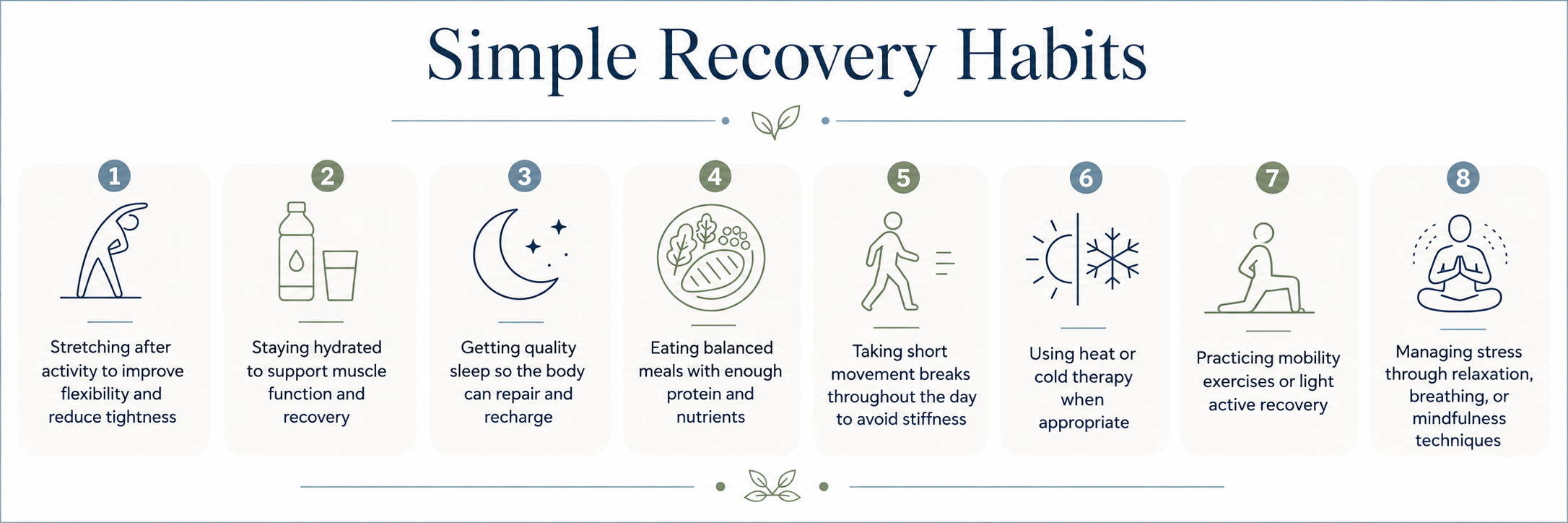
Stretching after activity is one of the simplest ways to support flexibility and reduce that tight, heavy feeling that can settle into muscles after movement.
You do not need an intense routine. A few gentle stretches for the areas you used most can make a difference. After walking, stretch the calves, hamstrings, hips, and lower back. After pickleball or golf, focus on the shoulders, wrists, hips, back, and legs. After gardening, stretch the hands, forearms, knees, hips, and lower back.
2. Use Active Recovery Instead of Only Resting
Active recovery is one of the biggest recovery-related search and fitness themes right now. Instead of sitting still after every workout or active day, many people are turning to light movement to help the body feel less stiff.
Examples of active recovery include:
Walking at an easy pace
Gentle yoga
Light cycling
Mobility exercises
Stretching
Foam rolling
Easy swimming
Slow bodyweight movement
The key is to keep it light. Active recovery should feel restorative, not exhausting. Recovery-focused routines are increasingly being positioned as part of fitness progress, not separate from it.
3. Stay Hydrated to Support Muscle Function
Hydration plays an important role in how the body feels before, during, and after activity. Muscles need fluids to function well, and dehydration can make the body feel more tired, tight, or sluggish.
For active adults, hydration is especially important after sweating, being outside in warm weather, exercising, traveling, or drinking more coffee than water during the day.
A simple recovery habit is to keep water nearby after activity and sip consistently instead of waiting until you feel thirsty.
4. Prioritize Sleep for Better Recovery
Sleep is one of the most overlooked parts of recovery. During quality rest, the body has time to repair, recharge, and prepare for the next day.
Recovery-focused fitness guidance continues to emphasize sleep, stress reduction, hydration, and protein as part of smarter training and active lifestyle routines. NASM’s 2026 trend discussion highlights recovery-first programming, including earlier bedtimes, hydration and protein reminders, mobility, walking, and stress-reduction habits.
If you are doing everything right during the day but not sleeping well, your body may not feel fully restored.
5. Eat Balanced Meals With Enough Protein
Protein is important because it helps support muscle repair and maintenance. This does not mean every meal needs to be complicated. A balanced recovery-friendly meal may include lean protein, colorful vegetables, healthy fats, whole grains, and plenty of fluids.
Good protein sources may include chicken, fish, eggs, Greek yogurt, beans, lentils, tofu, cottage cheese, or quality protein smoothies.
6. Take Short Movement Breaks Throughout the Day
Recovery is not only what happens after exercise. It also includes how you treat your body during the day.
Long periods of sitting, standing, driving, or working at a desk can contribute to stiffness. Short movement breaks can help the body stay loose and comfortable.
Try standing up every hour, walking for a few minutes, stretching your shoulders, opening your hips, or gently rotating your neck and back. These simple habits support everyday mobility and may help reduce that “stuck” feeling that builds up during long days.
7. Use Heat or Cold Therapy When Appropriate
Heat and cold therapy are common recovery tools, but they should be used wisely.
Cold therapy is often used after activity when areas feel overworked or irritated. Heat is often used when muscles feel tight or stiff. However, always follow product directions when using any topical pain relief product.
Important AcuPlus safety note: Do not use AcuPlus with a heating pad or apply external heat over the product. AcuPlus contains menthol, and using heat with menthol-based topical products can increase the risk of skin irritation.
8. Practice Mobility Exercises for Better Everyday Movement
Mobility is another high-interest recovery and fitness keyword. It is especially relevant for active adults, people over 50, pickleball players, golfers, walkers, and anyone who wants to move with more ease.
Mobility exercises are different from simple stretching. They help joints move through comfortable ranges of motion. Common mobility areas include the hips, shoulders, ankles, wrists, spine, and knees.
Simple examples include shoulder circles, hip openers, ankle circles, gentle spinal rotations, and controlled bodyweight movements.
ACSM’s fitness trends continue to emphasize active aging, functional ability, balance, strength, and mobility, especially as older adults become a larger and more active part of the fitness population.
9. Manage Stress With Breathing and Relaxation
Stress can affect the way your body feels. Tight shoulders, clenched hands, shallow breathing, poor sleep, and muscle tension often go together.
Adding a few minutes of breathing, mindfulness, stretching, or quiet relaxation after activity can help make recovery feel more complete. This also connects with the growing trend around fitness for mental health and whole-body wellness. ACSM’s 2026 trend list includes exercise for mental health among the top trends.
A simple recovery routine could be five deep breaths, a few shoulder rolls, a glass of water, and a short stretch before moving on with your day.
10. Add Targeted Topical Pain Relief When Minor Aches Show Up
Even with good recovery habits, minor muscle and joint aches can still happen. That is where a topical pain relief cream can fit into an everyday comfort routine.
AcuPlus Advanced Pain Relief is a menthol-based topical analgesic made to help provide temporary relief of minor aches and pains of muscles and joints associated with arthritis, backache, sprains, bruises, and strains.
Because it is applied directly where you need it, AcuPlus can be a helpful part of a recovery routine after activity, workouts, pickleball, golf, gardening, walking, travel, or long days on your feet.
AcuPlus is fast-absorbing, non-greasy, and easy to apply to common areas like:
Back
Knees
Shoulders
Neck
Hands
Wrists
Feet
Calves
Hips
Elbows
Use as directed. Adults and children 2 years of age and older may apply a thin layer to the affected area up to 3 times daily. For children under 2, consult a physician.
A Simple Recovery Routine You Can Start Today
You do not need a complicated plan. A simple recovery routine can look like this:
After activity, drink water.
Stretch the areas that feel tight.
Take a short walk or do light mobility.
Eat a balanced meal with protein.
Apply topical pain relief where minor aches are present.
Avoid using heat over menthol-based topical products.
Give your body time to rest and sleep.
Recovery is not just for athletes. It is for anyone who wants to keep moving, stay active, and feel more comfortable through everyday life.
Final Thought: Recovery Helps You Keep Doing What You Love
The best recovery routine is one you can actually stick with. It should feel simple, realistic, and easy to repeat.
Whether your activity is pickleball, golf, yoga, gardening, walking, workouts, travel, or keeping up with family, recovery is part of the routine.
AcuPlus can support your everyday comfort routine with targeted topical pain relief for minor muscle and joint aches,
so you can keep moving and keep doing more of what you enjoy.